Parent-Child Interaction Therapy (PCIT) for Young Children
Your child's behavior has gotten harder. You've tried everything. Nothing is sticking.
The tantrums that used to pass in a few minutes now last an hour. The hitting has started — at home, at daycare, at you. You've read the parenting books, you've tried the strategies, and some days it feels like you're making it worse just by being in the room.
You're not doing it wrong. You might just need a different approach — one that's built around your specific child and practiced together, in real time.
That's what Parent-Child Interaction Therapy is.
What is PCIT?
Parent-Child Interaction Therapy — PCIT — is one of the most well-researched treatments available for young children with behavior problems. It was developed specifically for children ages 2 to 7 and has decades of research behind it.
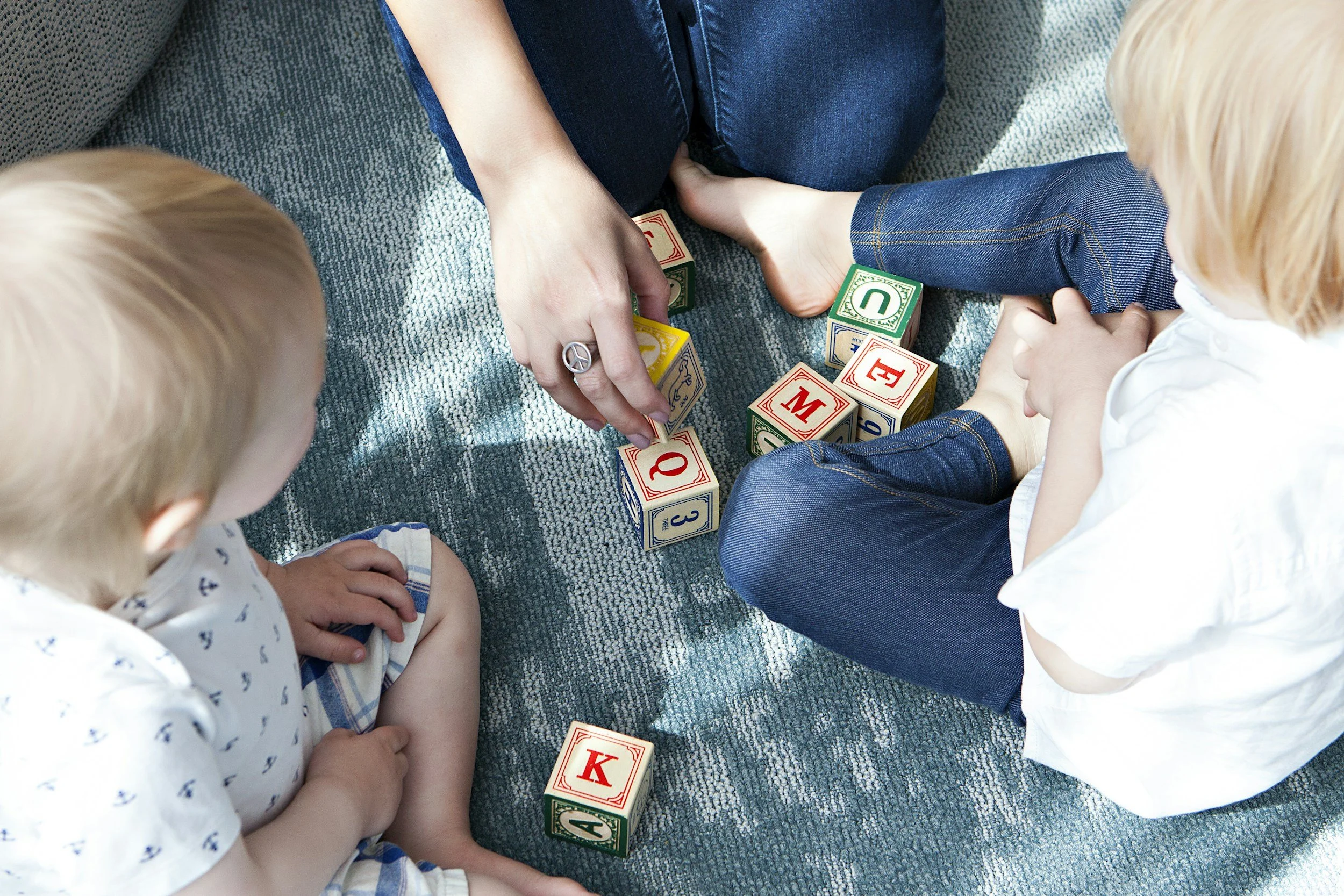
What makes PCIT different from traditional child therapy is that the parent is in the room the entire time. You're not dropping your child off and waiting for someone else to fix the problem. You're learning the skills yourself, practicing them with your child, and getting real-time feedback from a therapist through a bug-in-ear device while you play.
The research on PCIT is some of the strongest in child psychology. It works. And it works because it puts you — the most important person in your child's life — at the center of the treatment.
What does PCIT help with?
PCIT is effective for children ages 2–7 who are struggling with:
Tantrums and defiance
Your child melts down at the smallest limit. Transitions are a battle. Getting through a morning routine feels impossible. PCIT gives you a concrete, consistent framework for responding to defiance in a way that actually reduces it over time.
Aggression and hitting
Hitting, biting, throwing — at home, at school, at siblings. PCIT addresses the underlying relationship dynamics that drive aggressive behavior and gives you tools to respond in the moment without escalating things further.
ADHD-related behavior
Children with ADHD or suspected ADHD often struggle with impulsivity, following instructions, and emotional regulation. PCIT's skill-based approach is particularly well suited to kids whose behavior is driven by attention and regulation difficulties rather than willful defiance.
Noncompliance
Your child doesn't follow instructions — at home, at school, anywhere. PCIT builds compliance gradually and systematically, in a way that also strengthens your relationship rather than straining it.
How PCIT works
Phase one: Child Directed Interaction (CDI)
The first phase is about the relationship. You learn a specific set of skills for following your child's lead in play — skills that build warmth, connection, and your child's sense of security. This phase sounds simple. It is harder than it looks, and the research shows it makes a significant difference in behavior before we ever address limits directly.
Phase two: Parent Directed Interaction (PDI)
The second phase introduces a clear, consistent approach to giving instructions and following through. You practice it in session while I coach you in real time. By the time you're using it by yourself you've already practiced it enough that it feels natural.
Throughout both phases I'm watching through a video feed and coaching you through an earpiece as you play with your child. You get feedback in the moment, not after the fact.
What to expect
PCIT is structured but not rigid. Sessions are typically weekly. Progress is measured — we use standardized observations at the start of each phase so you can see the change, not just feel it.
Most families complete PCIT in 14 to 20 sessions, though this varies depending on the child and the goals. Some families need more time. Some move faster. The pace is driven by your child's progress, not a fixed number of sessions.
Is PCIT right for my child?
PCIT is a good fit if your child is between 2 and 7 years old and you're seeing consistent behavior problems at home, at school, or both.
It tends to be especially effective when:
Behavior problems have been going on for several months and aren't improving on their own
You've tried other approaches without lasting results
There's a suspected or confirmed diagnosis of ADHD, ODD, or a related condition
You want a structured, evidence-based approach rather than general parenting advice
Both caregivers are able to participate — PCIT works best when everyone in the home is on the same page
If you're not sure whether PCIT is the right fit, a free consultation is the best place to start. We can talk through what's going on and figure out together whether this is the right approach for your family.
More PCIT FAQ
Does PCIT work virtually?
Yes. Virtual PCIT has been studied and is effective. You'll need a device with a camera, a private space to do sessions, and a way to receive coaching — typically through an earbud connected to your phone or computer while you play with your child in the same room.
My child has an ADHD diagnosis. Is PCIT still appropriate?
Yes. PCIT is well suited to children with ADHD, impulsivity, and emotional regulation difficulties. It doesn't require a child to sit still or attend to a therapist directly — the work happens through play and through coaching you in real time.
Do both parents need to participate?
It's strongly recommended. PCIT works best when all primary caregivers are using the same skills consistently. If one parent is unable to participate regularly we can discuss how to make it work for your family.
What if my child is older than 7?
PCIT is designed for ages 2 to 7. If your child is older I'm happy to discuss other evidence-based options during a consultation.
How is this different from regular play therapy?
In traditional play therapy the child works with the therapist directly and the parent is typically not in the room. In PCIT you are the primary agent of change — I coach you, and you do the work with your child. The research on PCIT is considerably stronger than the research on nondirective play therapy for behavior problems.
Ready to get started?
If your child's behavior has you feeling stuck, exhausted, or worried — a free 20-minute consultation is the first step.
We'll talk about what's going on, whether PCIT is a good fit, and what working together would look like.
Dr. Lexie offers virtual PCIT and child behavioral consultation for families across PSYPACT states including Illinois, Indiana, Maryland, Washington D.C., Pennsylvania, Florida, and Texas. She specializes in early childhood mental health, toddler behavior problems, and parent-child relationship difficulties.